Ethiopia
The Enduring Legacy of Flavors
900 to 2,700 meters above sea level
Harvesting season: November – March
Ethiopian coffee is celebrated worldwide as the original land of all coffee cultivation. According to the prevailing historical narrative, the discovery of coffee is attributed to Kaldi, a shepherd whose goats displayed increased energy levels after consuming coffee cherries. According to lore, this fortuitous encounter would begin Ethiopia’s enduring connection with coffee.
Ethiopian coffee culture is deeply rooted in the traditional coffee ceremony called “Buna.” This elaborate ritual involves meticulous steps, including roasting coffee beans over an open flame, manual grinding, and brewing in a clay pot. The ceremony embodies values of community, warmth, and the celebration of life and represents an integral aspect of the country’s traditions.
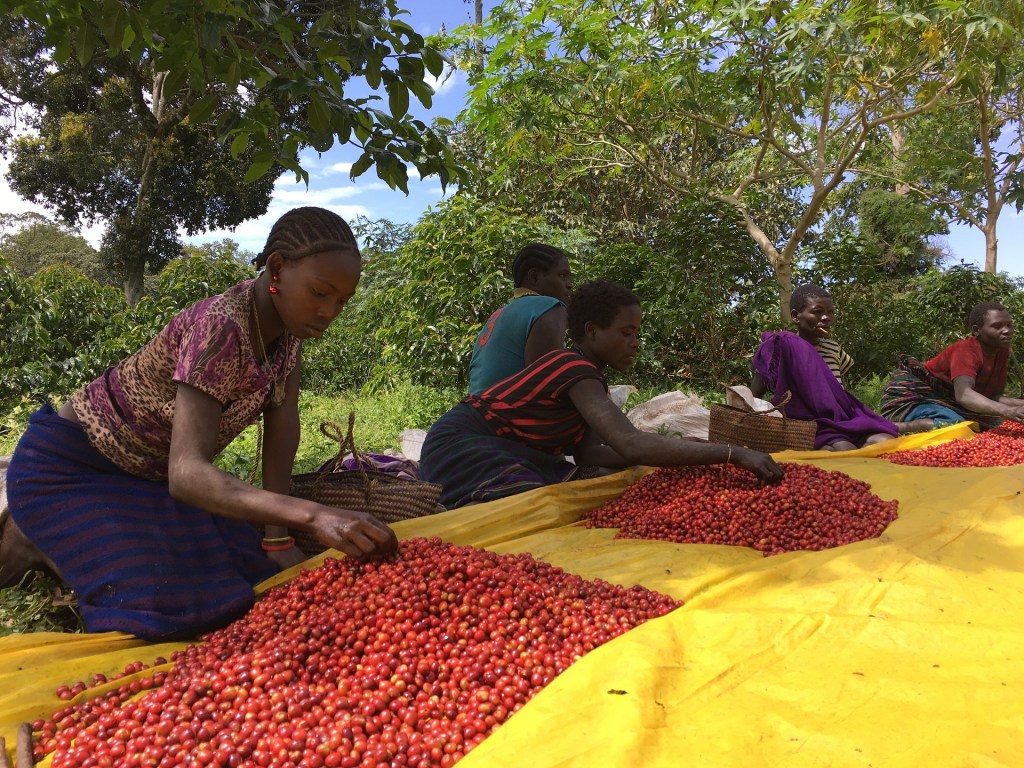

Coffee farming plantations thrive in Ethiopia due to being situated in strategically located highland regions, with cultivation altitudes ranging from 1,200 to 2,200 meters above sea level. These highlands benefit from cool temperatures and consistent rainfall, creating an ideal environment for coffee cultivation.
Coffee is pivotal in the country’s economy, providing livelihoods for numerous farmers and contributing significantly to Ethiopia’s Gross Domestic Product (GDP). Examples of Ethiopian coffee-producing regions are Sidamo, Yirgacheffe, and Harrar. The country´s main post-harvest adopted technique is naturally processing coffees, where the coffee cherries are dried with the fruit pulp intact.
Ethiopian Indigenous Heirloom Varieties offer a spectrum of flavors, encompassing fruity, floral, citrus, and berry notes, often accompanied by subtle hints of tropical fruits. This complexity is a hallmark of Ethiopian coffee.

 mannshacoffee.com